


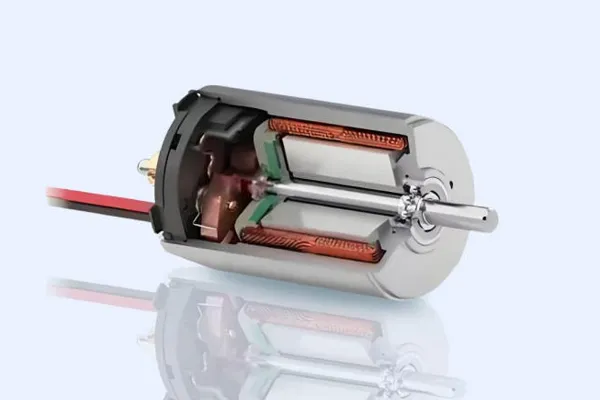
A brushless DC motor (BLDC) is a type of electric motor that uses electronic commutation instead of mechanical brushes to generate rotational motion. In this system, the rotor is typically made of permanent magnets, while the stator contains winding coils that are energized in a controlled sequence.
According to general motor principles described in Wikipedia’s DC motor and brushless motor references, this structure eliminates direct mechanical contact between brushes and commutator, which helps reduce wear and improve operational stability.
In power tools, BLDC motors are widely used because they offer higher efficiency, better thermal behavior, and longer operational life compared to traditional brushed motor systems.
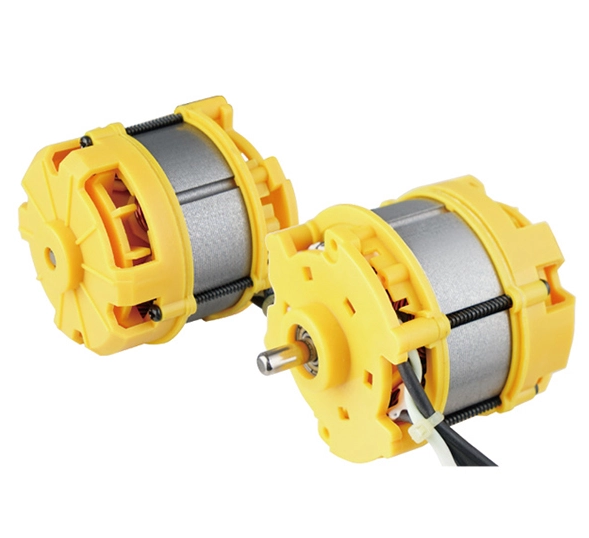
Brushless DC motors are increasingly adopted in cordless and electric power tools due to their performance advantages in demanding operating conditions.
The main reasons include:
Higher energy efficiency, helping improve battery utilization
Reduced mechanical wear due to the absence of brushes
More stable torque output under load variations
Better heat management during continuous operation
These characteristics make BLDC motors suitable for tools that require frequent start-stop cycles, load fluctuation, and long operating durations.
When selecting a brushless DC motor for power tools, engineers typically evaluate several core performance parameters.
Voltage is a primary factor. Most power tool systems operate in the 12V to 24V range depending on battery architecture and output requirements. Higher voltage systems generally support higher power output and better torque delivery.
Torque requirement determines whether the motor can maintain performance under sudden load changes such as drilling or tightening operations.
Speed characteristics define the operational balance between rotational speed and load resistance. Some tools require high RPM performance, while others rely more on torque stability.
Thermal performance is also critical, especially in continuous operation scenarios where heat accumulation may affect long-term motor stability and efficiency.
According to the working principle of BLDC motors, the motor operates through electronic commutation where a controller energizes stator windings based on rotor position.
This process creates a rotating magnetic field that interacts with permanent magnets on the rotor, generating continuous motion.
Compared to traditional brushed motors, this structure reduces friction losses and improves energy conversion efficiency. It also contributes to lower maintenance requirements and more stable performance under varying load conditions.
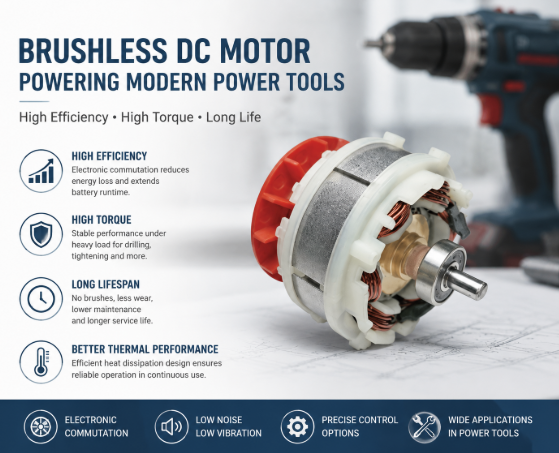
Brushless DC motors can be categorized based on their control and sensing methods, which affect performance and application suitability.
Open-loop control for simple fixed-speed applications
Closed-loop control using Hall sensors or encoders for precise speed and position regulation
Sensorless control that estimates rotor position electronically for cost-sensitive systems
Inner rotor BLDC motor for high-speed applications
Outer rotor BLDC motor for high torque density applications
Sensor-based and sensorless configurations depending on control precision requirements
Common types of bldc motor include inner rotor and outer rotor designs, which are selected based on torque and speed requirements.
Brushless DC motors are widely used across multiple application scenarios due to their efficiency and durability. They are commonly found in electric drills, electric wrenches, cordless screwdrivers, grinding tools, and portable power equipment.
Beyond power tools, BLDC motors are also used in automation systems, pumps, fans, medical devices, and precision control equipment where stable rotational performance is required.
In power tool applications, brushless and brushed motors differ significantly in performance and maintenance requirements.
Brushless motors provide higher efficiency because there is no friction loss from brushes and commutators. This also results in lower maintenance requirements and improved lifespan.
Brushed motors are simpler and cost-effective but require periodic maintenance and experience wear over time, especially under high-frequency usage conditions.
One common mistake is selecting a motor based only on size or voltage without considering torque requirements. This can result in insufficient performance under load conditions.
Another issue is ignoring thermal design requirements. Power tools often operate under continuous or repeated load, which can generate significant heat.
A third mistake is mismatching the motor with the controller system, which may affect efficiency and operational stability.
MGLORY brushless DC motors are designed for stable performance in power tool applications, focusing on efficient energy conversion and reliable torque output.
The company also provides custom dc motor solutions, including shaft design, voltage configuration, and structural customization based on different application requirements.
As a manufacturer in DC motor China supply chain, MGLORY supports OEM and customized motor solutions for various power tool systems and mechanical applications.
| Factor | Low Requirement | Medium Requirement | High Requirement |
|---|---|---|---|
| Voltage | 12V systems | 12–24V systems | 24V+ systems |
| Torque | Light load tools | Standard power tools | Heavy-duty tools |
| Speed | Moderate RPM | Balanced RPM/torque | High performance RPM |
| Thermal Load | Intermittent use | Regular operation | Continuous operation |
Selecting the right brushless DC motor for power tools depends on voltage, torque requirements, speed characteristics, and thermal performance. BLDC motors offer higher efficiency, longer lifespan, and better stability under load compared to brushed motors. MGLORY provides application-oriented solutions including custom dc motor designs for different power tool systems, ensuring stable performance across varied operating conditions.
What is a brushless DC motor used for?
Brushless DC motors are used in power tools, automation systems, medical devices, fans, and electric mobility systems.
What are the advantages of BLDC motors?
They offer higher efficiency, longer lifespan, lower maintenance, and better thermal stability compared to brushed motors.
What control methods are used for BLDC motors?
They include open-loop control, closed-loop control with sensors, and sensorless electronic commutation systems.
Are BLDC motors suitable for precision applications?
Yes, with electronic control systems, BLDC motors can achieve precise speed and position control.
 English