


In the micro DC motor field, "coreless motor" is increasingly found in precision equipment and high-end instrument selection lists. Many purchasers and engineers wonder: How does it differ from common brushed/brushless DC motors? Why is it preferred for precision equipment of the same volume? This article explains coreless motors simply, highlighting their key advantages and applicable scenarios.
A coreless motor is a special micro DC motor, with its core difference in the rotor — unlike traditional motors with iron-core coils, its rotor is a hollow, cup-shaped enameled wire coil (hence "coreless") that fits directly over the stator magnet.
In short, traditional micro motor rotors are "iron core + coil", while coreless rotors are hollow coils (no iron core), a simple structural change that greatly improves performance.
Note: Coreless motors are brushed or brushless; most used in precision equipment are brushless, featuring low noise, long service life and high precision.
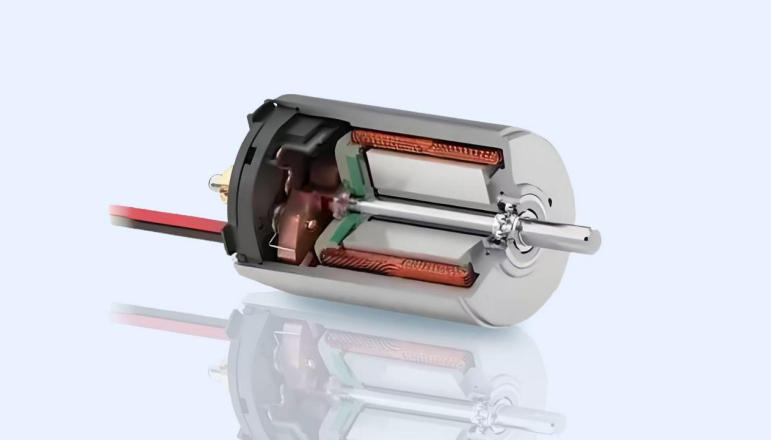
Precision equipment (medical instruments, small robots, UAVs, etc.) demands small size, light weight, fast response, low noise, low energy consumption and stable accuracy — coreless motors meet these needs perfectly. Key advantages:
1. Small Size and Light Weight, Adapting to Miniaturization
Without a rotor iron core, coreless motors are 30%-50% smaller and lighter than traditional motors of the same power, fitting the limited internal space of precision equipment (e.g., micro medical detectors, portable beauty instruments).
For example, a portable blood glucose detector’s test paper feeder can use a coreless motor, which fits easily while providing sufficient driving force.
2. Fast Response and High Precision
The lightweight rotor has low moment of inertia, enabling millisecond-level start/stop/speed adjustment — critical for precision positioning (e.g., surgical robot joints, UAV attitude control).
No iron core means no "cogging effect" (speed fluctuation from iron core-stator gaps), ensuring stable operation and minimal vibration.
3. Low Noise and Vibration for High-End Scenarios
Coreless motors have no iron core-stator friction, operating below 30dB (soft voice) with negligible vibration, ideal for quiet environments (e.g., labs, high-end homes).
Noise and vibration are over 50% lower than traditional motors, enhancing user experience for close-contact devices (e.g., beauty pens, micro massagers).
4. High Efficiency and Longer Battery Life
No iron core reduces eddy current loss, with 85%-90% energy conversion efficiency (vs. 70%-80% for traditional motors).
For battery-powered portable equipment (UAVs, medical devices), this boosts battery life by 20%-30% — a key selection factor.
5. Long Service Life and Stability
Brushless coreless motors use electronic commutation (no brushes/commutators), lasting over 10,000 hours (3-5x longer than brushed motors). Less heat generation reduces part aging, improving stability.
This lowers equipment maintenance costs and enhances market competitiveness for precision devices.
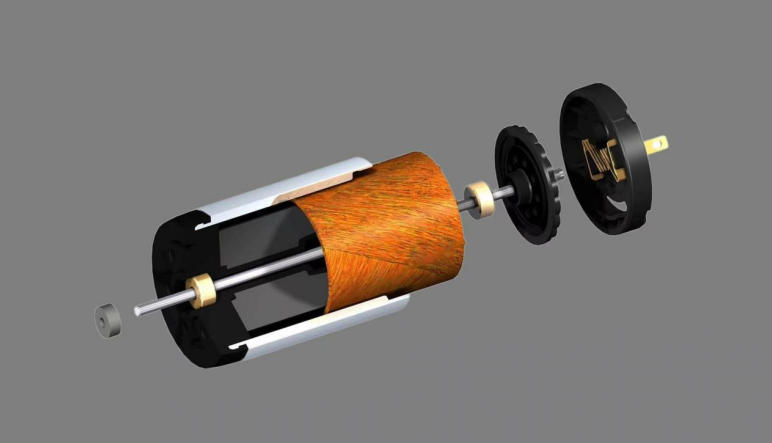
Coreless motors are widely used in scenarios requiring miniaturization, high precision, low noise and long battery life, mainly in 4 fields:
• Medical equipment: micro infusion pumps, blood glucose detectors, surgical robots, hearing aids;
• Intelligent equipment: small robots, smart door locks, UAVs, smart wearables;
• High-end small appliances: beauty pens, micro massagers, high-end shavers;
• Industrial precision instruments: micro sensors, small automation equipment.
Coreless motors cost slightly more than traditional ones due to their coil structure, so they suit high-performance, budget-sufficient precision scenarios. For low-demand equipment, traditional brushed/brushless motors are more cost-effective.
Contact us for professional selection advice and customized solutions if you’re unsure about suitability or parameters (voltage, speed, torque, size).
Coreless motors’ advantages (small size, light weight, fast response, low noise, high efficiency, long life) stem from their hollow rotor, perfectly matching precision equipment needs. As precision and intelligent devices develop, they will become a standard for high-end equipment.
We’ll share more coreless motor selection tips and FAQs later — leave a comment with other motor topics you want to know!
 English