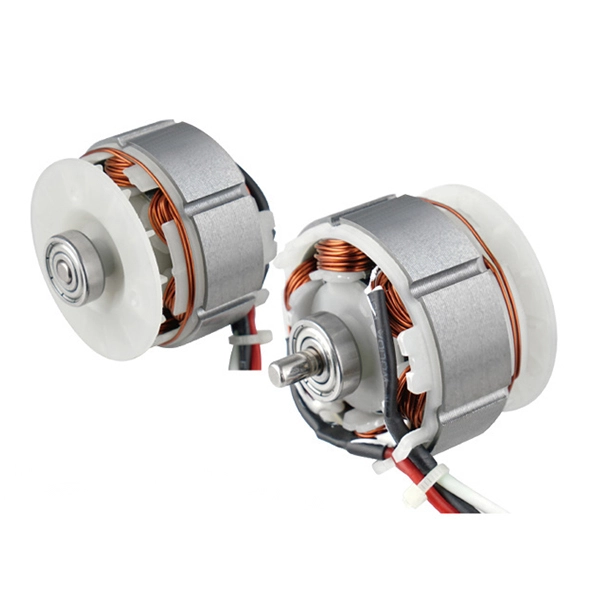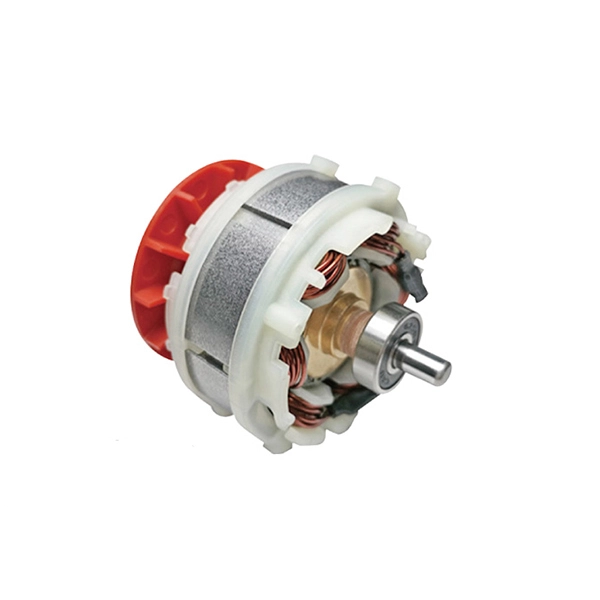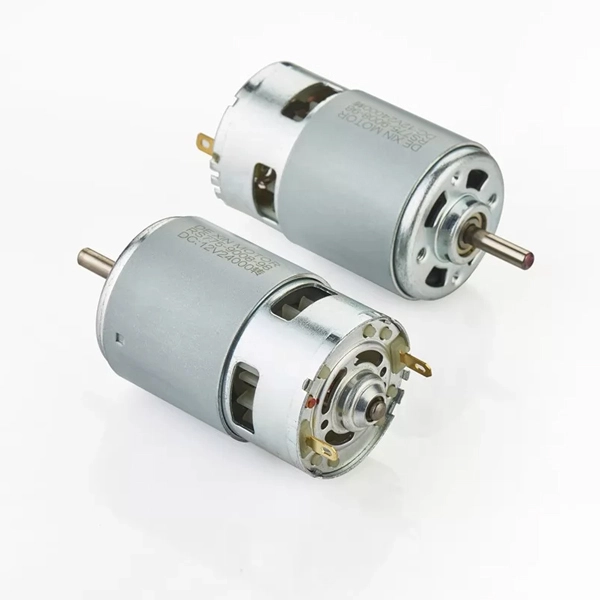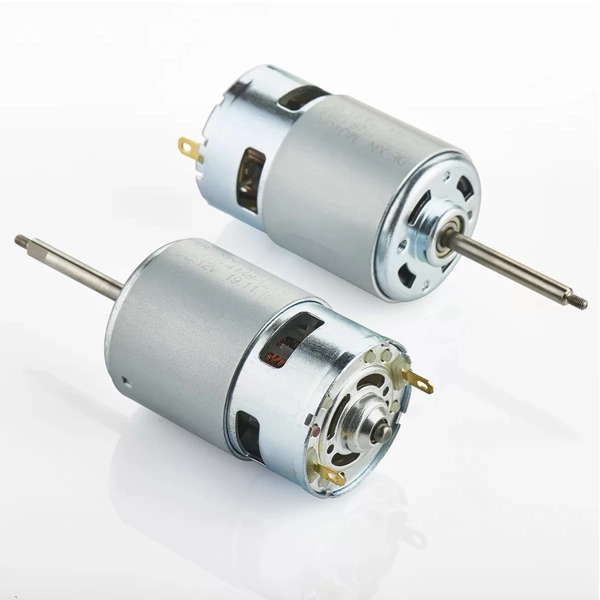


Wholesale DC motor sourcing should begin with the application’s operating point—not with the lowest unit price or a catalogue RPM. A useful RFQ defines voltage, loaded speed, continuous and peak torque, duty cycle, motor dimensions, shaft interface, noise target, service life and annual demand. The supplier can recommend a brushed, brushless or geared design and confirm it through samples. For OEM buyers, the challenge is consistency from pilot samples to mass production. Mglory supplies compact DC motors and custom development for power tools, appliances, automotive components and robotics.
A wholesale DC motor specification defines required performance, mechanical interface and operating environment. State the nominal, minimum and maximum supply voltage. Then provide the required speed under load, continuous torque, startup or peak torque and the duration of each operating cycle. No-load RPM alone is insufficient because current, temperature and usable output change after the motor drives the real mechanism.
Mechanical information should include:
Maximum motor diameter and length
Shaft diameter, length and shape
Mounting pattern and front boss
Gear, pulley, coupling or gearbox interface
Lead wire, terminal and connector
Rotation direction and installation position
Temperature, moisture, dust, vibration, repeated starts and acoustic limits may affect the bearing, brush, insulation and cooling design.
Buyers can review the Mglory RS380 DC motor for compact loads and the Mglory RS775 DC motor for a larger frame and higher-output applications. Mglory's product pages identify their electrical values as reference data and allow special wholesale requirements to be evaluated.
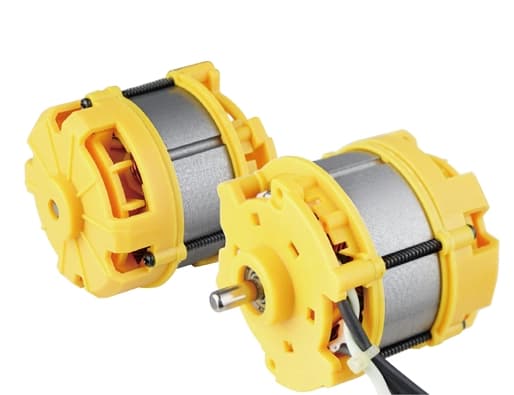
A DC motor selection table connects the application’s load pattern with the appropriate motor construction and sample tests.
| Application Requirement | Suitable Starting Point | Main RFQ Data | Sample Test Priority |
|---|---|---|---|
| Simple high-speed drive | Brushed PMDC motor | Voltage, loaded RPM, torque | Brush temperature, noise, life |
| Long-life variable-speed drive | BLDC motor | Torque-speed range, controller | Efficiency, controller matching |
| Low-speed high-torque output | DC gear motor | Output RPM, output torque | Gear noise, backlash, gear life |
| Compact precision mechanism | Customized PMDC motor | Envelope, shaft, speed tolerance | Dimensions and vibration |
| Power tool or garden equipment | High-output brushed or BLDC | Peak torque, current, cooling | Stall response and temperature |
| Automated actuator | Sensored BLDC or gear motor | Feedback, cycles, load profile | Repeatability and endurance |
For a precision PMDC motor wholesale project, prioritize speed consistency, shaft runout, vibration and dimensional tolerance. A Mglory BLDC-4815 brushless DC motor provides a reference for compact electronically commutated applications. Equipment needing reduced speed and increased output torque can be compared with the Mglory BLDC-Gear-4820 brushless DC gear motor. Final selection requires the actual load curve and system test.
MOQ is the minimum production quantity at which a supplier can economically prepare materials, winding settings, fixtures, inspection and packaging for one motor specification. Mglory states that its normal MOQ is generally 1,000–10,000 pieces depending on the model after sample approval. Smaller quantities may be discussed for the first one or two orders, while samples are handled separately. Buyers should therefore request three figures: engineering-sample quantity, pilot quantity and regular mass-production MOQ.
A custom DC motor quotation may be affected by:
Winding and magnet specification
Bearing or bushing selection
Shaft machining and special gears
Brush and commutator requirements
Cooling, suppression components or sensors
Gearbox ratio and materials
Connector and wire assembly
Inspection, packaging and forecast volume
Ask the OEM DC motor manufacturer to separate tooling and engineering charges from the unit price. An annual forecast supports material planning without forcing a large first order. Buyers should also confirm whether the quotation includes sample testing, customized packaging, inspection reports and export documentation. A lower quoted unit price may not represent the lower total sourcing cost when tooling, rejected batches or repeated validation are considered.
A DC motor supplier’s quality system should control incoming materials, production variation, final inspection and corrective action—not simply provide a certificate. The official ISO 9001 quality-management framework covers controlled processes, documented information, evaluation and continual improvement. Supplier audits should confirm that these principles appear in production records.
Review:
Approved drawings and revision history
Incoming checks for wire, magnets, shafts and bearings
Winding resistance and insulation tests
Shaft runout and rotor balance
No-load speed and current
Loaded torque and current sampling
Noise, vibration and endurance criteria
Lot identification and nonconforming-product control
Test equipment also matters. The NIST guidance on metrological traceability explains that measurement results need a documented chain of calibrations to specified references. Ask how tachometers, torque testers, current meters and dimensional gauges are calibrated.
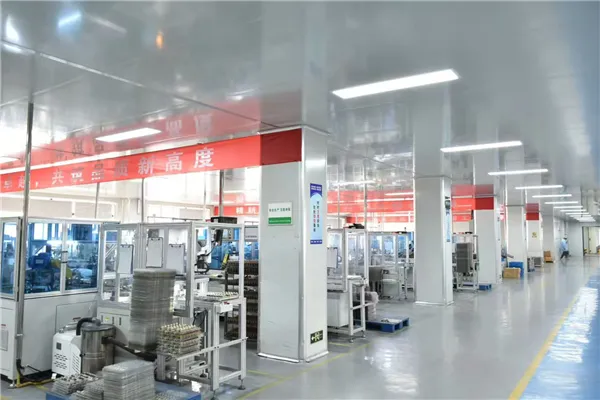
Mglory states that its controls include incoming-material, in-process and final inspection, and that it holds ISO 9001 and IATF 16949 certifications. Buyers should request current certificate scopes and product-specific inspection documents.
Bulk DC motors should be released only after an approved sample, frozen specification and agreed control plan are in place. Test samples in the real device rather than only at no load. Record supply voltage, loaded speed, current, temperature rise, noise and operating life. A gearbox, fan or pump should be tested as a complete assembly because mechanical load changes current and heating. After approval, retain a golden sample and signed drawing. Define tolerances, test voltage, inspection method, packaging and change-notification rules. A pilot lot should include several motors so that batch variation can be checked before regular production.
Before release, agree on:
Critical electrical and dimensional limits
Sampling and 100% inspection items
Lot code and inspection-report format
Treatment of rejected or reworked units
Lead time, packaging and delivery schedule
Mglory's custom DC motor service follows requirement confirmation, design, sample production, testing and adjustment before mass production. Using the same gated process reduces the risk of approving a sample that cannot be reproduced consistently.
Provide voltage range, loaded speed, continuous and peak torque, duty cycle, dimensions, shaft drawing, rotation, current limit, operating environment, lifetime target, connector, annual volume and required certifications.
Mglory states that the regular MOQ is generally 1,000–10,000 pieces depending on the model after sample approval. Smaller initial quantities may be discussed.
Often yes. Voltage, winding, speed, shaft, wires, connectors, bearings, suppression components and gearbox may be adjusted after engineering evaluation.
Compare the same loaded operating point, materials, tolerances, test scope, expected life, packaging, tooling and quality documents. Identical voltage and no-load RPM do not guarantee identical loaded performance.
Critical values such as rotation, no-load current and speed may be checked on every unit, while destructive endurance tests usually use samples. The plan should match application risk.
Approve the signed drawing, performance specification, golden sample, control plan, inspection limits, packaging, labeling, change rules and pilot-lot results.

 English