


In many motion systems, choosing a motor is not only about achieving high rotational speed. The real challenge is matching motor output with the mechanical requirements of the application. A brushless motor gearbox combines the high-speed performance of a brushless motor with the torque conversion capability of a gearbox, allowing engineers to achieve lower output speed, higher torque and more controlled motion.
A brushless motor can operate efficiently at high speeds, but many industrial mechanisms, robotic systems and automation equipment require slower and stronger movement. By adding a gearbox, the motor’s rotational characteristics can be adjusted to better match the load. Understanding how speed, torque and gear ratio interact is essential when selecting the right drive system.
A brushless motor and gearbox solve different parts of the same motion-control challenge. The motor is responsible for generating rotational energy, while the gearbox adapts that energy to meet the requirements of the mechanical load.
Many brushless motors are designed for efficient high-speed operation. However, directly connecting a high-speed motor to a machine may create problems when the application requires precise movement, higher starting force or stable low-speed operation. A gearbox changes the relationship between motor speed and output performance by reducing rotational speed and increasing available torque at the output shaft.
For example, applications such as robotic joints, automated equipment, electric actuators and compact transportation systems often require:
Lower output speed for controlled movement
Higher torque to handle mechanical resistance
Improved matching between motor characteristics and load requirements
A brushless motor gearbox provides this mechanical adjustment without requiring the motor itself to operate outside its efficient range.
The basic principle of a gearbox is speed conversion. When a gearbox reduces rotational speed, it allows the output shaft to deliver higher torque compared with the motor shaft.
For example, consider a brushless motor running at 6,000 rpm with a 10:1 gear ratio. Under ideal conditions, the output speed can be calculated as:
6,000 rpm ÷ 10 = 600 rpm
At the same time, the theoretical torque multiplication is approximately related to the gear ratio. A 10:1 gearbox can theoretically increase torque by around ten times before considering efficiency losses.
However, real systems are not perfectly efficient. Gear friction, bearing losses, lubrication conditions and gearbox design all affect the final output. Therefore, a gearbox does not simply multiply torque without limitations. Engineers must consider gearbox efficiency and rated torque when designing a complete motion system.
This is why selecting a brushless motor gearbox requires looking beyond motor speed alone. The final performance depends on how well the motor, gearbox and mechanical load work together.
Gear ratio is often viewed as a simple speed-reduction value, but it also influences torque output, response characteristics and system behavior. A higher gear ratio creates greater speed reduction, but it may also reduce response speed because the motor needs more time to accelerate the increased mechanical load.
The following example shows how different gear ratios affect output speed when the motor speed remains constant.
| Gear Ratio | Motor Speed | Ideal Output Speed |
|---|---|---|
| 5:1 | 6,000 rpm | 1,200 rpm |
| 10:1 | 6,000 rpm | 600 rpm |
| 20:1 | 6,000 rpm | 300 rpm |
Illustrative calculation based on ideal transmission without efficiency losses.
A suitable gear ratio depends on the actual requirements of the system. A conveyor may prioritize continuous torque output, while a robotic mechanism may require a balance between torque, speed and positioning response. Therefore, the best gearbox is not always the one with the highest reduction ratio.
A brushless motor and gearbox are not competing technologies. Instead, they complement each other by solving different engineering requirements.
The brushless motor provides efficient electrical-to-mechanical energy conversion through electronic commutation rather than mechanical brushes. This design allows smooth operation, reduced mechanical wear and strong performance at higher speeds.
The gearbox focuses on mechanical adaptation. It adjusts the motor’s output characteristics by converting speed into usable torque and making the drive system more suitable for the connected load.
When combined, these two components create a flexible motion solution. The brushless motor provides efficient power generation, while the gearbox ensures that the available power is delivered in a form the machine can effectively use.
The performance of a brushless motor gearbox system depends on more than the motor itself. Several gearbox characteristics directly influence the final operating behavior.
Gear ratio determines the relationship between input speed and output speed. A higher ratio generally provides greater torque multiplication but reduces output speed.
No gearbox transfers energy with 100% efficiency. Internal friction and mechanical losses reduce the actual torque available at the output shaft.
Backlash refers to the small amount of movement caused by clearance between gear teeth. In precision applications, excessive backlash may affect positioning accuracy.
During continuous operation, heat generated by the motor and gearbox can influence reliability. Proper thermal design is important for systems operating under heavy loads.
A well-designed system balances these factors rather than focusing on a single specification.
A brushless motor gearbox is commonly used where compact size, efficient operation and controlled mechanical output are required. The combination is especially useful in systems where a direct-drive motor would operate too quickly or provide insufficient torque.
In robotics, gearboxes help convert high-speed motor rotation into controlled joint movement. In automated equipment, they provide stable motion for positioning mechanisms and production systems. Electric actuators also benefit from this combination because they often require strong output force within a compact structure.
The selection process usually starts with the mechanical load. Engineers first determine the required output speed, torque and operating conditions, then select a suitable gearbox ratio and motor configuration. This approach ensures that the complete drive system performs efficiently.
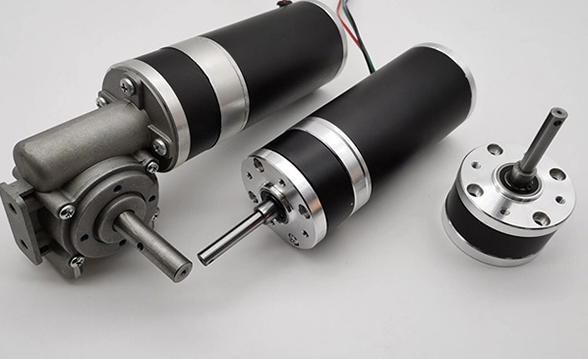
A brushless motor gearbox is valuable because it connects motor performance with real mechanical requirements. Instead of simply choosing a motor with the highest speed or power rating, engineers need to consider output torque, operating speed, efficiency and load characteristics together.
The most effective solution starts from the application requirements and works backward toward motor and gearbox selection. Mglory Motor provides motor solutions designed for different motion applications, helping customers match motor performance with specific transmission and load requirements.
A gearbox does not increase the motor’s original power output, but it converts speed into higher usable torque at the output shaft.
Because real gear systems have friction, mechanical losses and other efficiency limitations, the actual output torque is lower than the ideal calculation.
Not necessarily. A higher ratio can increase torque but may reduce speed, responsiveness and dynamic performance.
Yes. Some applications can use direct drive when the motor’s speed and torque characteristics already match the load requirements.
Backlash is mainly caused by clearance between gear teeth and mechanical tolerances within the gearbox.
Gearbox size can influence torque capacity, efficiency, weight, installation space and the overall design of the motion system.
 English